
Claude Code Is Becoming a Multi-Agent SDLC Runtime

Claude Code Is Becoming a Multi-Agent SDLC Runtime
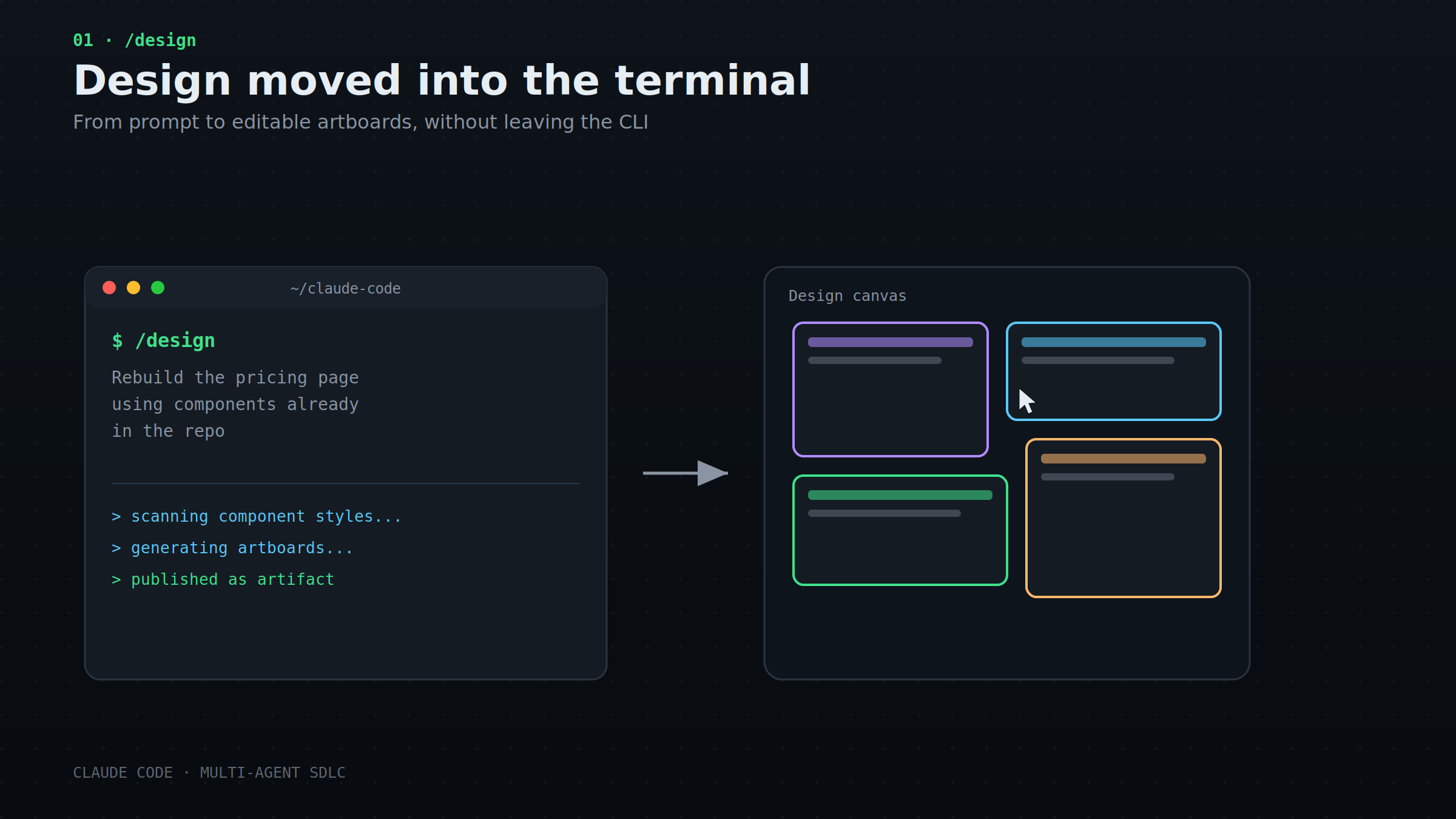
1. Claude Code /design: Design From the Codebase
Design moved into the terminal
As per my experience, I've found that AI is becoming much more useful when it moves beyond just generating ideas and starts becoming part of the actual workflow.
One example that caught my attention is Design moving into the terminal. /design shipped in research preview. Hand it an idea, a screenshot, or an existing design and it produces editable Claude Design artboards without leaving the CLI. In Anthropic's own example, it rebuilt a design from the component styles already present in the repo and published it as a shareable artifact - on Team and Enterprise, anyone you make an editor can revise it and publish a new version.
Read that again: it pulled the design system from the codebase. The usual direction is design -> handoff -> implementation drift. Here the code is the source of truth and the artboard is generated from it, which inverts the drift problem. The suggested pattern is /design a few options for {feature} before you build - cheap divergence, three directions in less time than scheduling the review meeting.
It's a research preview. Treat it accordingly.
2. Concise Output for Long-Running Agent Workflows
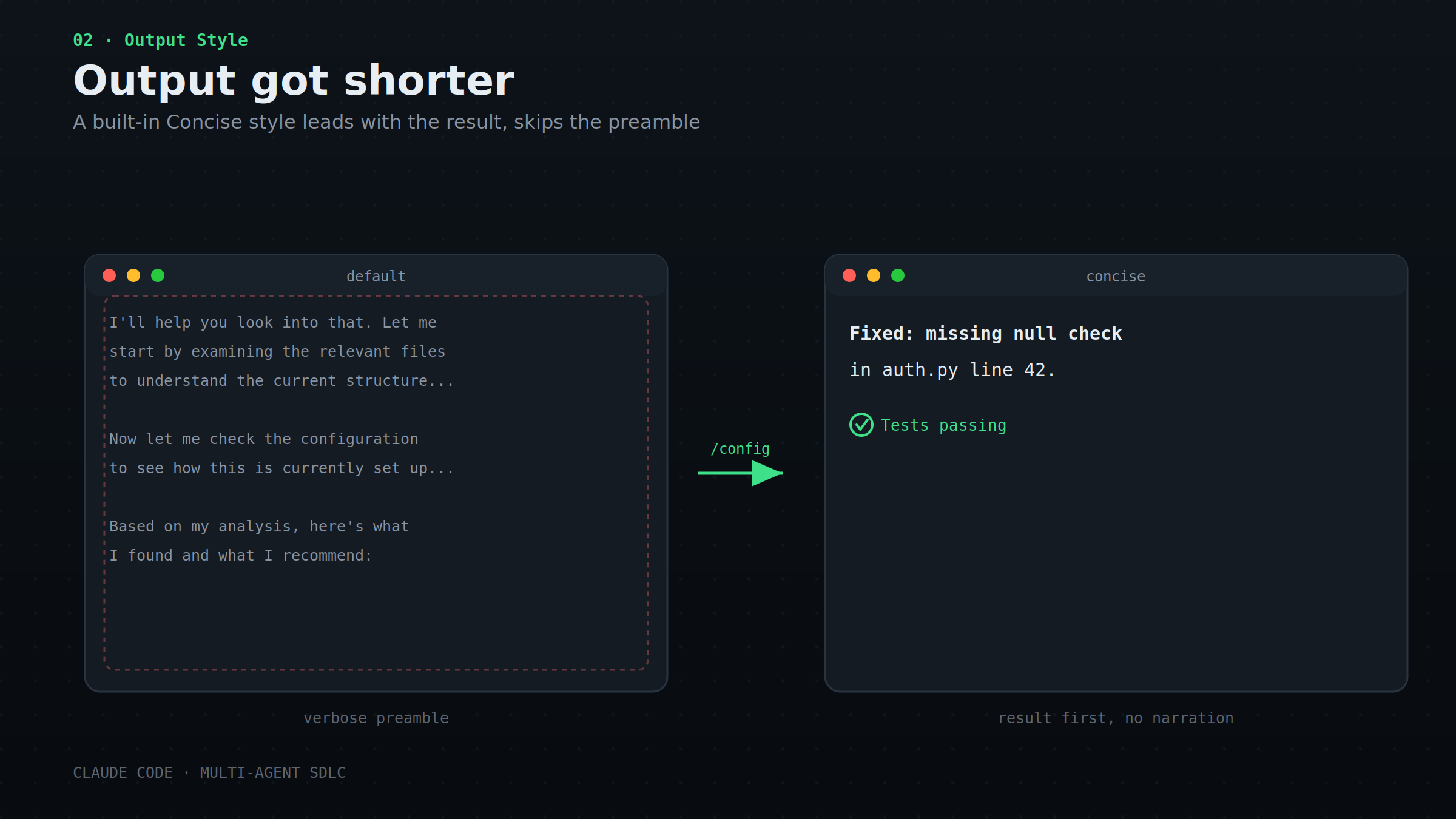
Output got shorter
There's now a built-in Concise output style. With it on, Claude leads with the result and skips the preamble and narration. Turn it on in /config -> Output style, or set "outputStyle": "Concise" in settings.json. Anthropic framed it as a stopgap while they work on a longer-term fix for verbosity.
Sounds cosmetic. It isn't. Multiply preamble across 8-10 subagents running for hours and verbosity becomes a line item - in tokens billed, in context window consumed, and in human attention spent skimming for the answer.
A related fix in 2.1.238: custom output styles now stay in effect for the whole session instead of drifting back to the default voice partway through. If you'd set a custom style and noticed it quietly stop working, that's why.
3. Claude Code Permissions and Intent-Based Policies
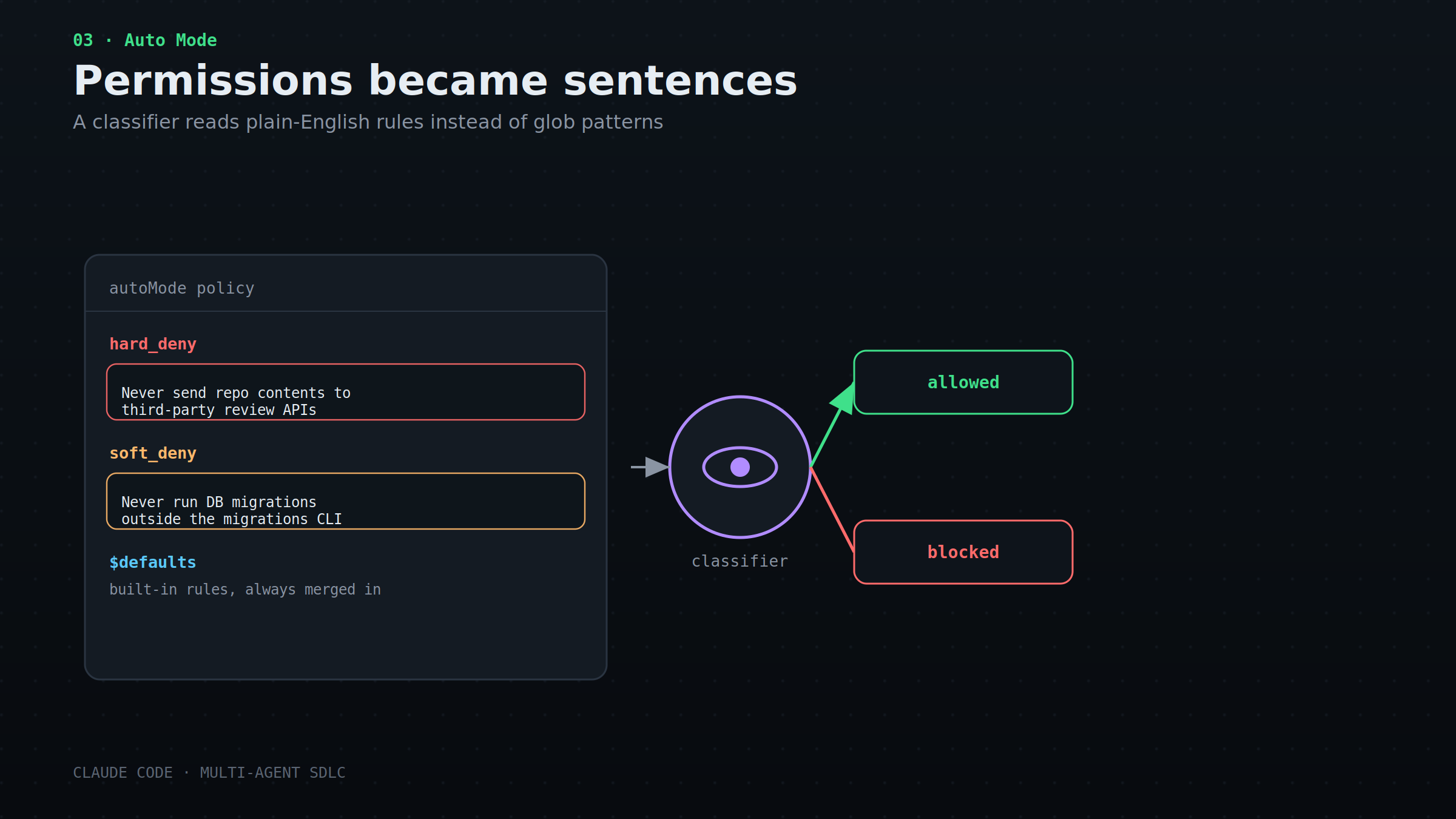
Permissions became sentences
This is the change I'd pay most attention to. Auto mode rules are now plain English:
{
  "autoMode": {
    "soft_deny": [
      "$defaults",
      "Never run database migrations outside the migrations CLI"
    ],
    "hard_deny": [
      "$defaults",
      "Never send repository contents to third-party code-review APIs"
    ]
  }
}
A separate classifier model reviews each action and reads these rules when deciding what to allow or block. hard_deny entries block unconditionally. soft_deny entries block unless a direct request or an allow entry overrides them. $defaults preserves the built-in rules. They live in user settings, so project-level settings can't overwrite them, and they persist across every project.
For two years, permission scoping has meant tool allowlists and glob patterns. Brittle, and always one shell alias away from useless - rm -rf in a regex tells you nothing about intent. This moves the policy layer from pattern-matching to intent-matching.
There's also claude auto-mode critique, which surfaces entries that are ambiguous, redundant, or likely to produce false positives. A linter for your policy file. That's the detail that signals this is meant as a real control surface rather than a toggle.
One caution: classifier-based enforcement is probabilistic. Anything genuinely non-negotiable - production credentials, data egress - belongs in hard_deny and in CI and in your IAM boundaries. The prompt is a layer, not the wall.
Separately, auto mode became the default on August 14 for new sessions on Pro, Max, and Team plans. If you'd set your own default, Claude asks before changing it, and defaultMode in settings lets you pin one.
4. Auto-Continue Keeps Claude Code Work Moving
Limits stopped ending your work
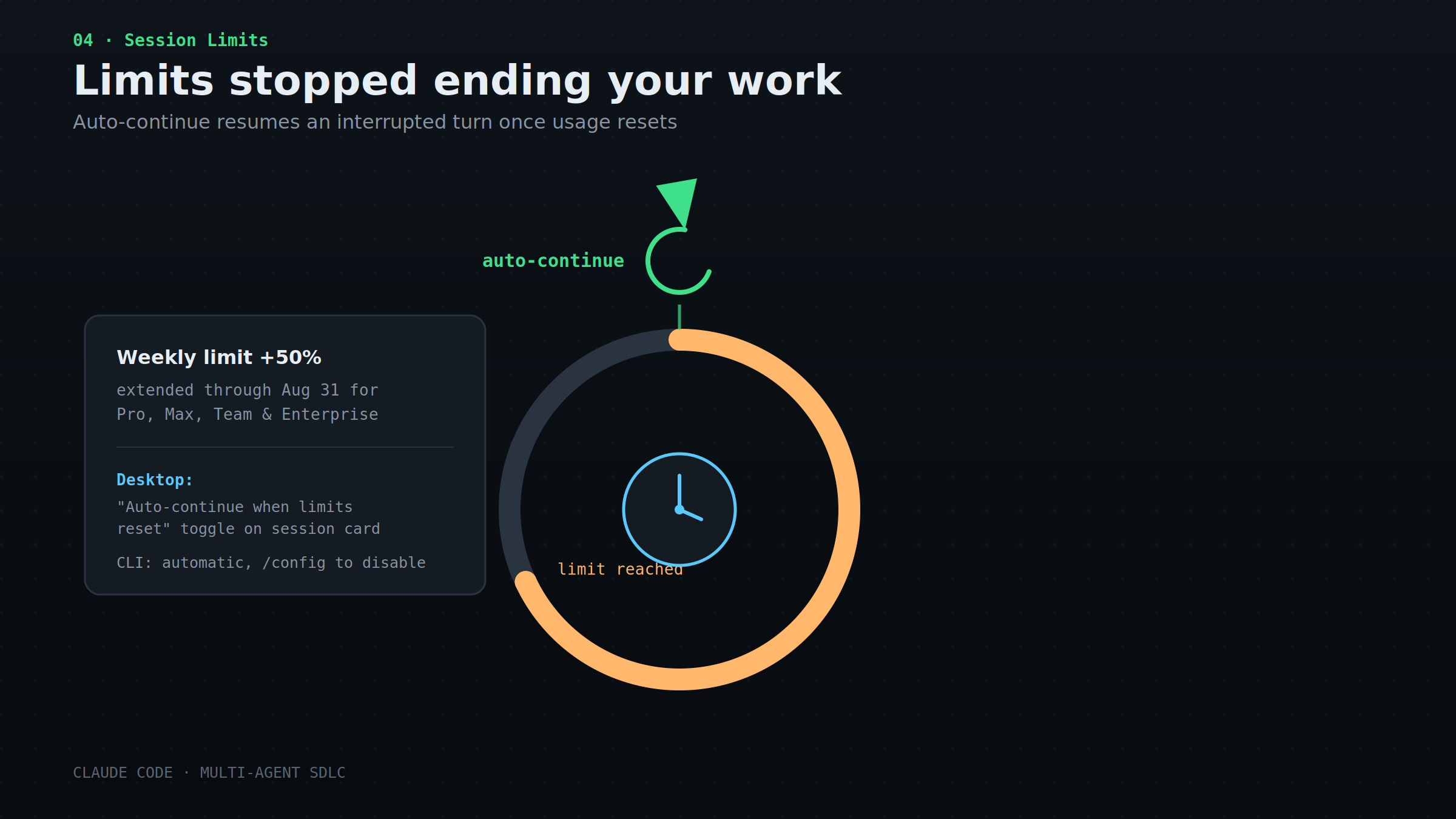
Auto-continue picks up an interrupted turn once a usage limit resets. In the CLI it happens automatically and you can disable it in /config. On Desktop, tick "Auto-continue when limits reset" on the session-limit card - note that the weekly-limit card doesn't offer it.
The 50% increase to weekly Claude Code limits is extended through August 31 for Pro, Max, Team, and seat-based Enterprise. Anthropic says they hope to make it permanent but need more time given demand.
5. Claude Code Evolves Toward a Multi-Agent Runtime
Model selection got a default
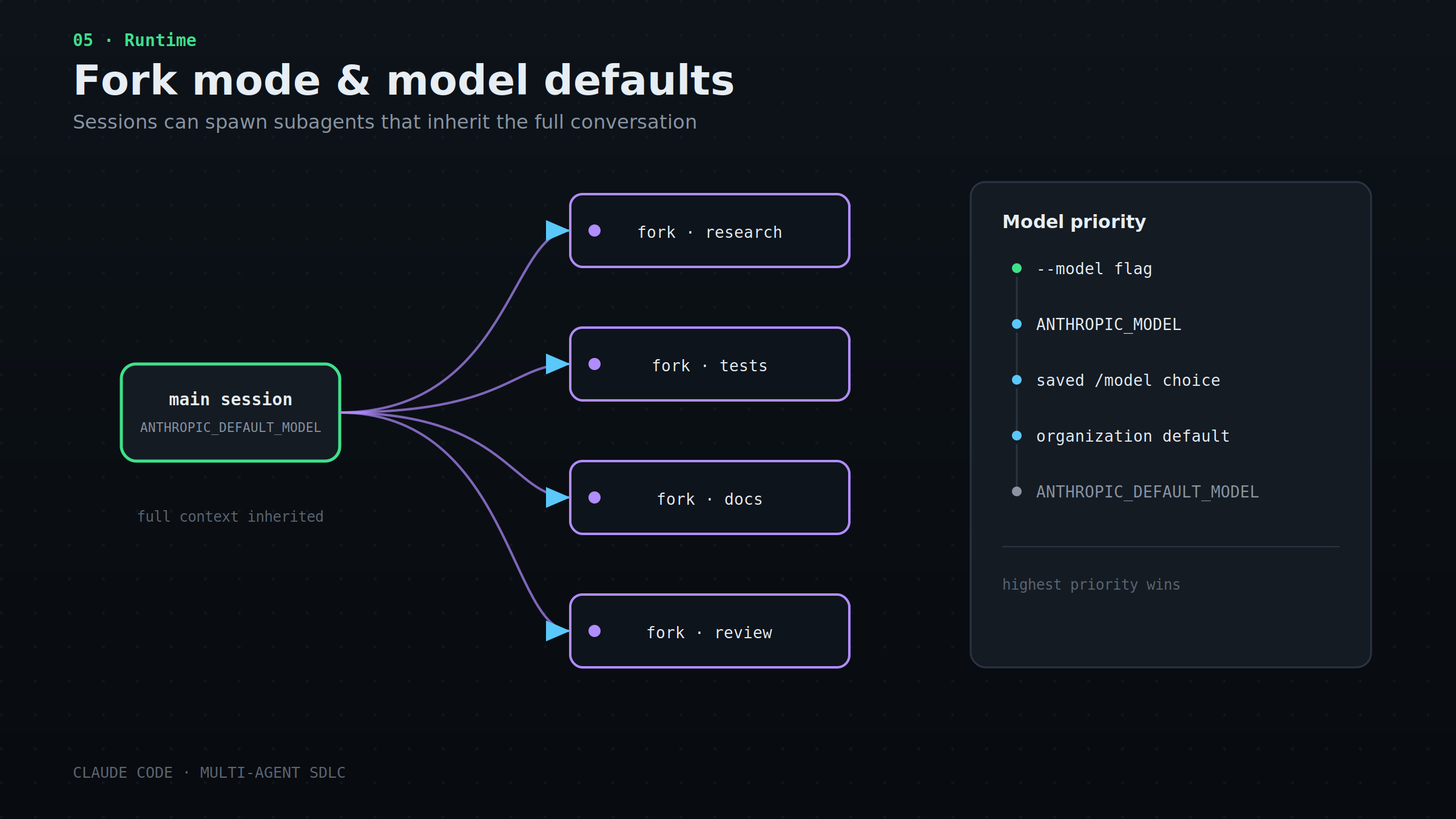
ANTHROPIC_DEFAULT_MODEL sets which model new sessions start on when nothing else selects one. Priority order matters: --model, ANTHROPIC_MODEL, a saved /model choice, and an organization default all override it.
Fork mode is on by default in interactive sessions. Claude can spawn a fork subagent that starts with the full conversation, and subagents run in the background. It's off with -p and in the Agent SDK; set CLAUDE_CODE_FORK_SUBAGENT=1 to enable.
@ mentions across sessions - When another session is open on the same machine, type @ and its name to route your message there. macOS and Linux only, and not supported on Bedrock, Claude Platform on AWS, Google Cloud's Agent Platform, or Foundry.
Long sessions no longer grow in memory without limit.
Individually: housekeeping. Together: context inheritance, inter-process messaging, connection durability, memory management for long-lived processes, and crash recovery.
That's not a CLI assistant getting incremental polish. That's the requirements list for a multi-agent runtime, being built one unglamorous bug fix at a time.
6. GitLab and Background Code Review Workflows
Git and review workflow
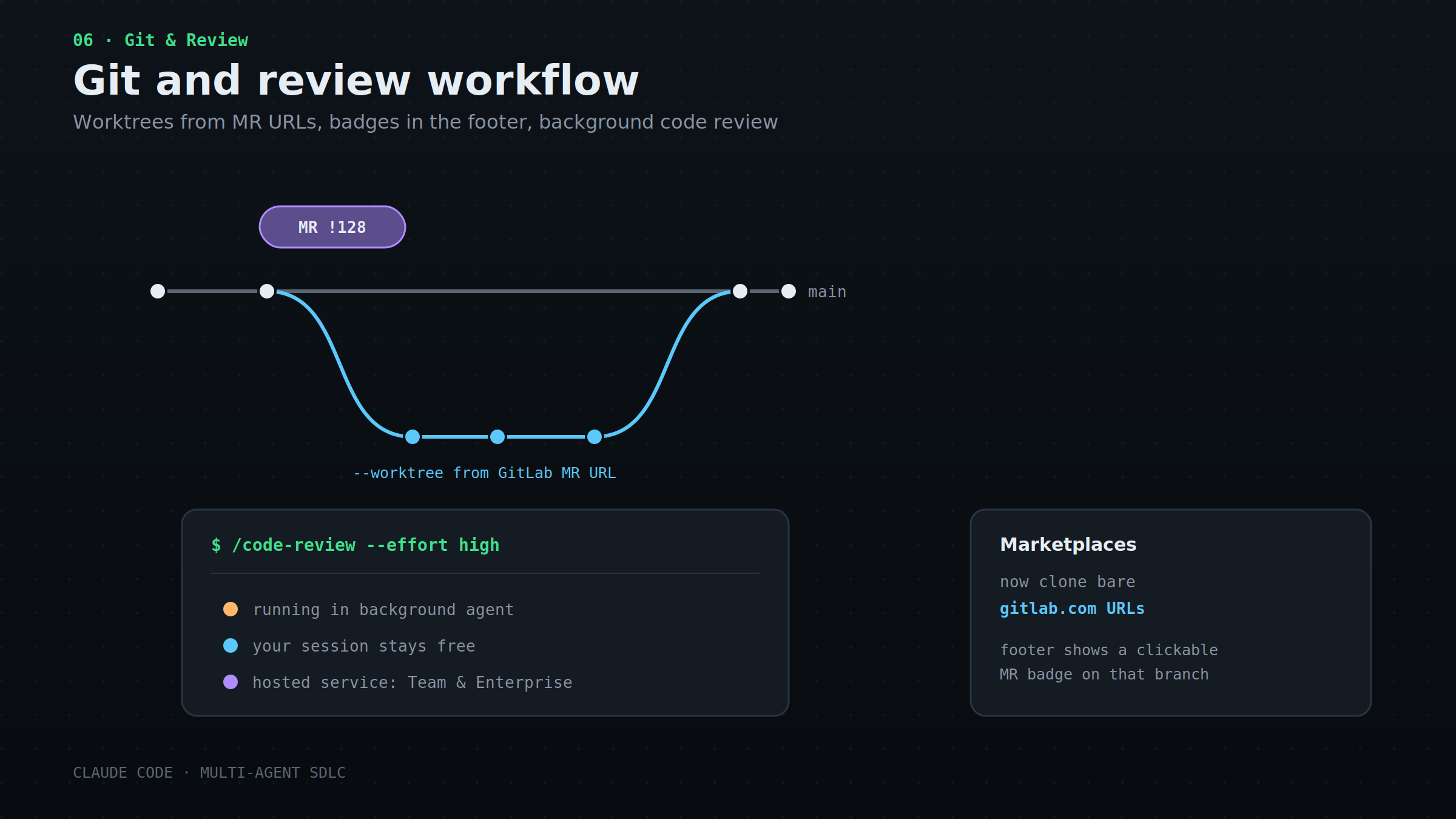
--worktree now accepts a GitLab merge request URL and creates the branch from it. On a branch with an open MR, the footer shows a clickable MR !N badge. Marketplaces also clone bare gitlab.com URLs.
/code-review at high, xhigh, or max effort now runs in a background agent instead of taking over your session. The hosted Code Review service remains Team and Enterprise only.
7. Why Process Durability Matters for Multi-Agent SDLC
The takeaway
Building multi-agent SDLC pipelines, the thing that breaks is never reasoning quality. It's process durability. Runs that die at hour six. State that doesn't survive a restart. Agents that can't reach each other.
That's what got fixed this week. Quietly, in the changelog. If your mental model of Claude Code is still "chat, but in the terminal," the product moved without you.
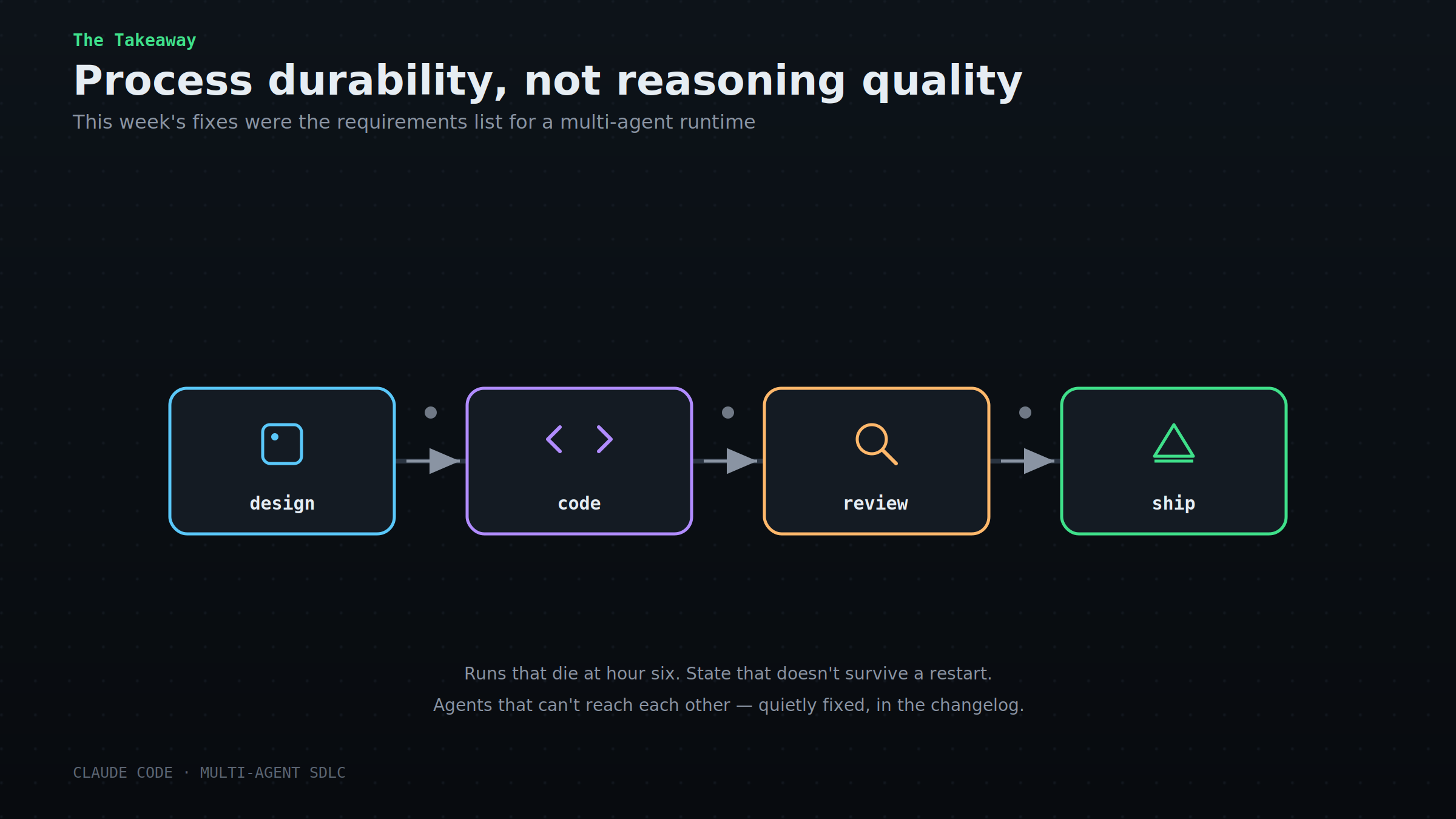
Table of Contents
- Claude Code /design: Design From the Codebase
- Concise Output for Long-Running Agent Workflows
- Claude Code Permissions and Intent-Based Policies
- Auto-Continue Keeps Claude Code Work Moving
- Claude Code Evolves Toward a Multi-Agent Runtime
- GitLab and Background Code Review Workflows
- Why Process Durability Matters for Multi-Agent SDLC
Start with a focused, high-impact scope
Deliver more with fewer
people.
Bring us a data operations bottleneck, a delivery capability gap, or a GCC ramp challenge. We'll recommend the right team shape and operating model and prove it with a real working engagement.