
The AI Native SDLC: Faster Code Is Not the Same as Faster Delivery

The AI Native SDLC
Faster Code Is Not the Same as Faster Delivery
For the last two years, almost every engineering conversation has started with the same question: how much faster can developers code with AI?
I think that is the wrong question.
Code was never the only constraint in software delivery. The larger constraint has always been the distance between an idea and a dependable outcome - the meetings, interpretations, queues, reviews, rework, and missing context between what a customer needs and what finally reaches production.
AI can help an engineer produce code faster. But if the requirements are unclear, the architecture is weak, the data contract is missing, or nobody has agreed what success means, AI simply helps the team move faster in the wrong direction.
We have seen this firsthand. AI can generate a polished requirements document, an impressive architecture diagram, or a plausible implementation plan in minutes. But when a senior engineer or customer asks why a particular trade-off was made, the absence of real engineering thinking becomes visible very quickly.
That lesson has shaped how we are building ProductSquads.
The opportunity is not to add AI to the existing software development lifecycle. It is to redesign the lifecycle around a new division of work: agents execute more of the repeatable delivery of work; people own the intent, judgment, and outcome.
That is what we mean by an AI native SDLC.
The Real Problem Is Not Typing Speed
A traditional software lifecycle is a chain of translations.
Customer conversation becomes brief. The brief becomes a PRD. The PRD becomes user stories. The stories become technical tasks. The tasks become code, test cases, deployment instructions, and documentation.
Every translation creates two risks. The first is delay: work waits for another person, another meeting, or another approval. The second is loss of intent: each person receives a smaller version of the context available at the beginning. An engineer may understand the ticket but not the customer's outcome. A tester may understand the acceptance criteria but not the risk the feature is meant to address. An operations team may receive a release without understanding the architectural assumptions behind it.
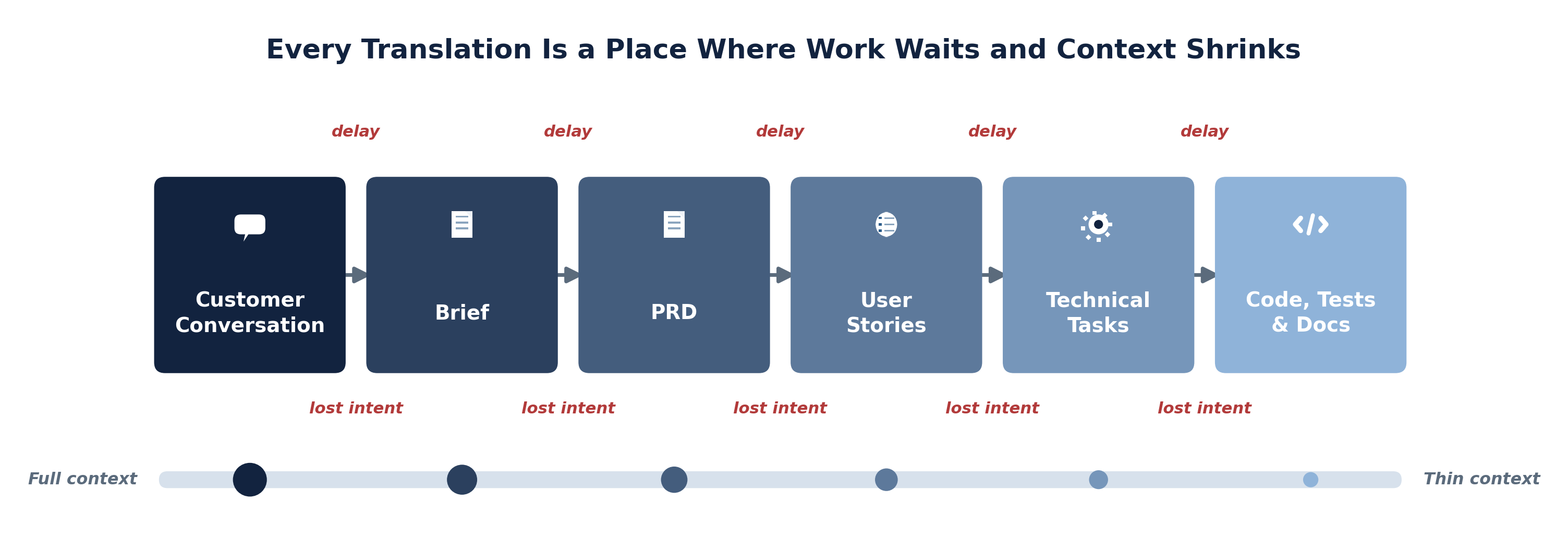
Figure 1 - Every handoff in the traditional lifecycle risks delay and lost intent.
This is why a coding copilot, useful as it is, cannot transform delivery on its own. It improves one activity inside a system whose economics are still determined by handoffs, ambiguity, and rework.
Making one runner faster does not transform a relay race if the baton is still dropped between stages.
From AI Assisted to AI Native
It helps to distinguish three stages of maturity.
In an AI assisted team, individuals use AI to complete tasks faster: drafting a story, generating code, writing a unit test, or summarizing an incident.
In an agent enabled team, specialist agents can execute connected activities across the lifecycle. A change in a requirement can inform the implementation plan, test coverage, documentation, and release evidence.
In an AI native team, the operating model itself changes. Context is persistent. Decision rights are explicit. Evidence travels with work. Automation is bounded by policy, risk, and human accountability. The team is measured on customer and engineering outcomes - not on how much AI it uses.
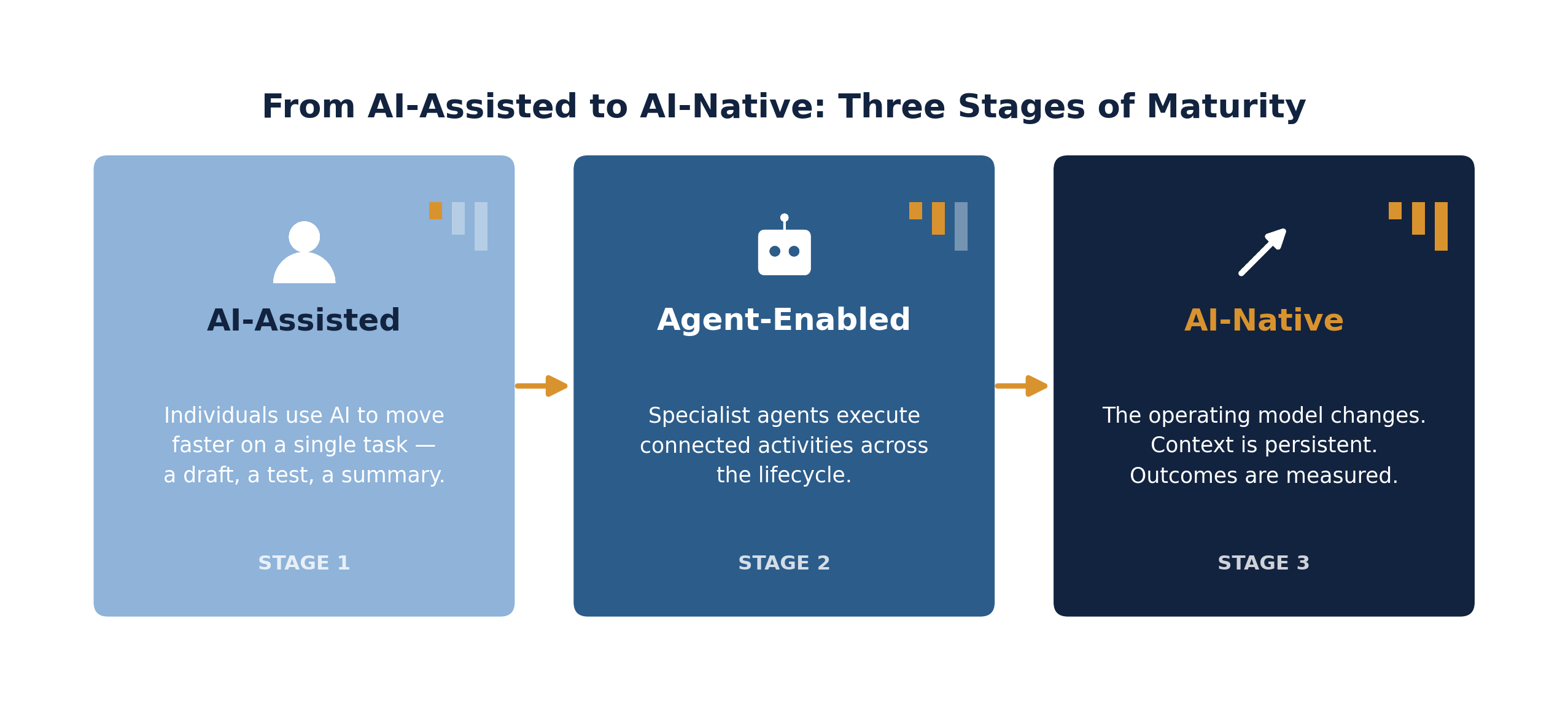
Figure 2 - Most organizations sit between Stage 1 and Stage 2. The mistake is declaring victory too early.
Most organizations today are somewhere between the first and second stages. There is nothing wrong with that. The mistake is declaring victory because developers have access to a copilot.
The Cyborg Team
At ProductSquads, we call this new delivery unit a Cyborg Team.
The name is deliberate. It is neither a conventional team with a collection of AI tools nor an autonomous system with a human watching from the side. It is one team composed around the strengths of both.
Agents are well suited to work that benefits from speed, repetition, and continuous attention. They can trace requirements, analyze a codebase, draft implementation options, generate and review code, expand test coverage, maintain documentation, inspect telemetry, and assemble release evidence.
People are responsible for what cannot be delegated: understanding the customer, challenging assumptions, choosing trade-offs, evaluating risk, designing the realities of the business, and being accountable for what goes into production.
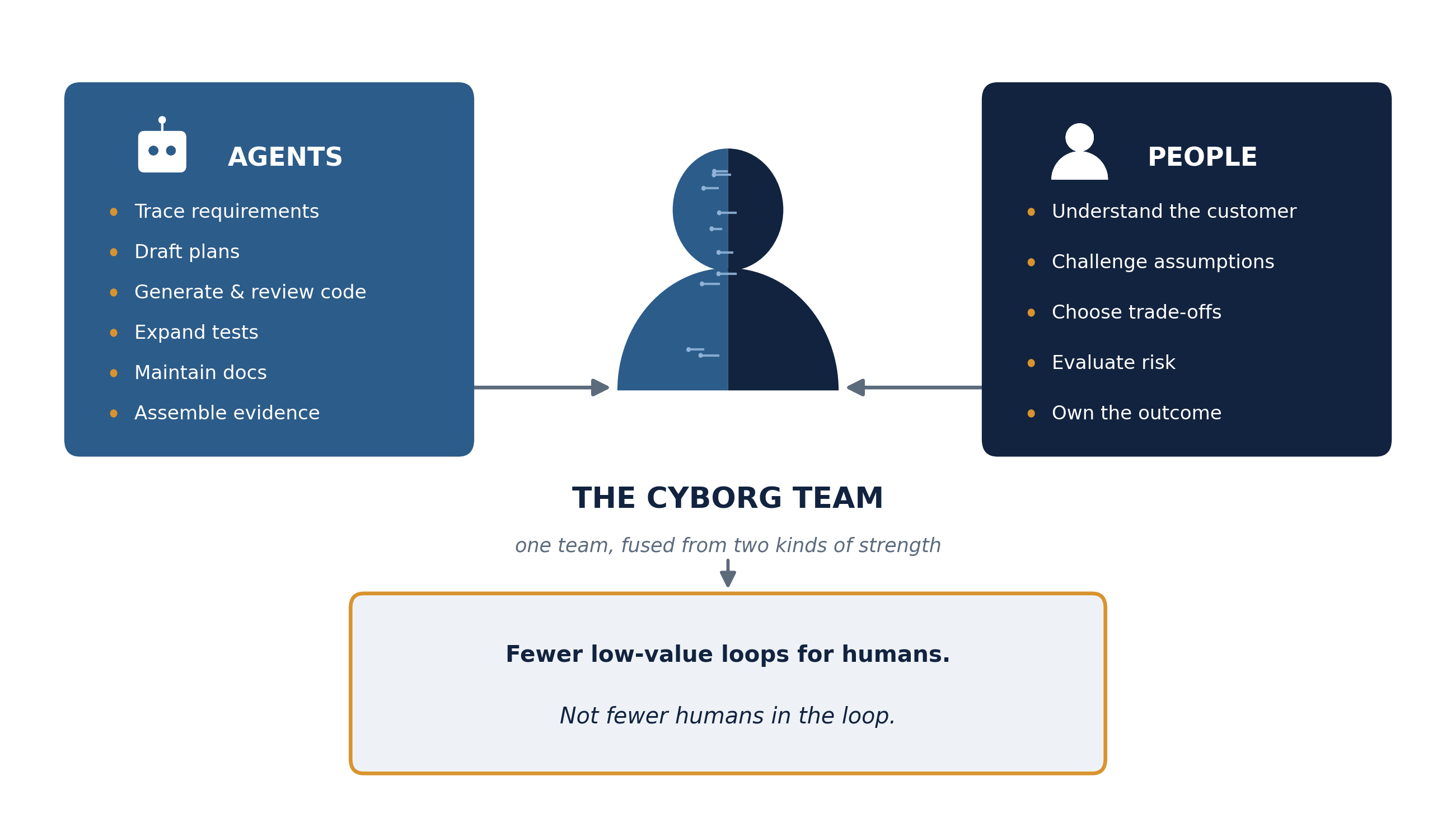
Figure 3 - The Cyborg Team divides work by strength, not by headcount.
Context Becomes Engineering Infrastructure
The most important part of an AI native SDLC is not the model. It is context.
An agent needs more than a ticket. It needs to understand the product intent, domain language, architectural decisions, coding conventions, data contracts, security policies, past incidents, and the definition of a good outcome.
For data and information services businesses, this becomes even more important. A technically valid change can still be commercially wrong if it breaks lineage, changes a taxonomy, weakens auditability, or misunderstands how a customer uses the data.
This context cannot live only in meetings or in the heads of a few experienced people. It must be maintained as engineering infrastructure: versioned, retrievable, testable, and connected to delivery.
Without it, AI produces output that is fast, polished, and often shallow. With it, agents can operate more like informed members of the team.
Guardrails for Policy. Review Gates for Judgement.
An AI native lifecycle does not remove control. It makes control more explicit.
Guardrails should automatically enforce what the organization already knows must be true: security rules, coding standards, test thresholds, data handling policies, and deployment controls.
Review gates should sit where judgement is required: accepting a product assumption, choosing an architectural trade-off, approving a material datamodel change, or deciding whether a production risk is acceptable.
Every gate needs a named human owner. The agent may prepare the recommendation and evidence, but accountability cannot belong to a model.
The level of human review should also follow the level of risk. A documentation correction should not require the same approval path as a change to an entitlement service or financial data pipeline.
This is how teams gain speed without pretending that every decision is equally reversible.
What Should We Measure?
AI adoption is easy to demonstrate and surprisingly difficult to prove.
The number of prompts, generated lines of code, or activated licenses tells us very little about whether delivery has improved. In some cases, more generated code simply creates more code to understand, test, and maintain.
We prefer a small set of outcome measures:
The baseline matters. Without knowing how the team performs before the change, almost any AI pilot can be presented as a success.
Four Principles We Are Building Around
Our approach continues to evolve, but four principles have become clear.
Preserve intent from conversation to production
Every artefact should connect to the customer outcome and the decisions that shape it - requirements, code, tests, and release evidence should never become isolated documents.
Use specialist capability, but maintain one shared context
Different tasks need different tools and agents, but specialization should not recreate the silos we are trying to remove.
Automate execution, not accountability
Agents can propose, generate, inspect, and operate within defined boundaries. Humans remain responsible for consequential decisions and outcomes.
Measure delivery economics, not AI activity
If cycle time, quality, reliability, and cost are not improving together, the operating model has not improved - no matter how impressive the demo looks.
How Would I Start?
I would not begin with a companywide rollout or a large collection of tools.
I would choose one meaningful product journey with measurable pain: a slow onboarding flow, a recurring data pipeline change, a feature area with high rework, or a service with weak test and operational coverage.
I would do four things:
This approach gives leaders evidence they can trust and gives teams the space to learn where AI genuinely improves the system.
The Future of Delivery Is a Better Division of Work
I do not believe the future of software belongs to AI replacing engineers.
I believe it belongs to engineering organizations that redesign work so human judgment and machine execution compound each other.
When we get that division right, the distance between idea and outcome becomes shorter. Engineers spend more time understanding hard problems and less time reconstructing missing context. Quality becomes continuous rather than a stage at the end. Smaller teams can take responsibility for larger outcomes without lowering the standard of engineering.
That is the AI native SDLC we are building at ProductSquads: agents executing across the lifecycle, people owning the judgment, and customer outcomes remaining the measure of success.
If you are considering where to begin, start with your delivery system - not your AI tool list.
ProductSquads works with technology leaders to map one product journey, establish the baseline, and design a bounded AI native delivery pilot. If that is a conversation you are having inside your organization, I would be glad to compare notes.
— Pratik Modi, Founder & CEO, ProductSquads
Table of Contents
- The Real Problem Is Not Typing Speed
- From AI Assisted to AI Native
- The Cyborg Team
- Context Becomes Engineering Infrastructure
- Guardrails for Policy. Review Gates for Judgement.
- What Should We Measure?
- Four Principles We Are Building Around
- How Would I Start?
- The Future of Delivery Is a Better Division of Work
Start with a focused, high-impact scope
Deliver more with fewer
people.
Bring us a data operations bottleneck, a delivery capability gap, or a GCC ramp challenge. We'll recommend the right team shape and operating model and prove it with a real working engagement.